Cross-Game Reward Networks Redefine How Players Move Between Slots, Tables, and Wagers
Iris Simon · Jun 28, 2026
Cross-Game Reward Networks Redefine How Players Move Between Slots, Tables, and Wagers
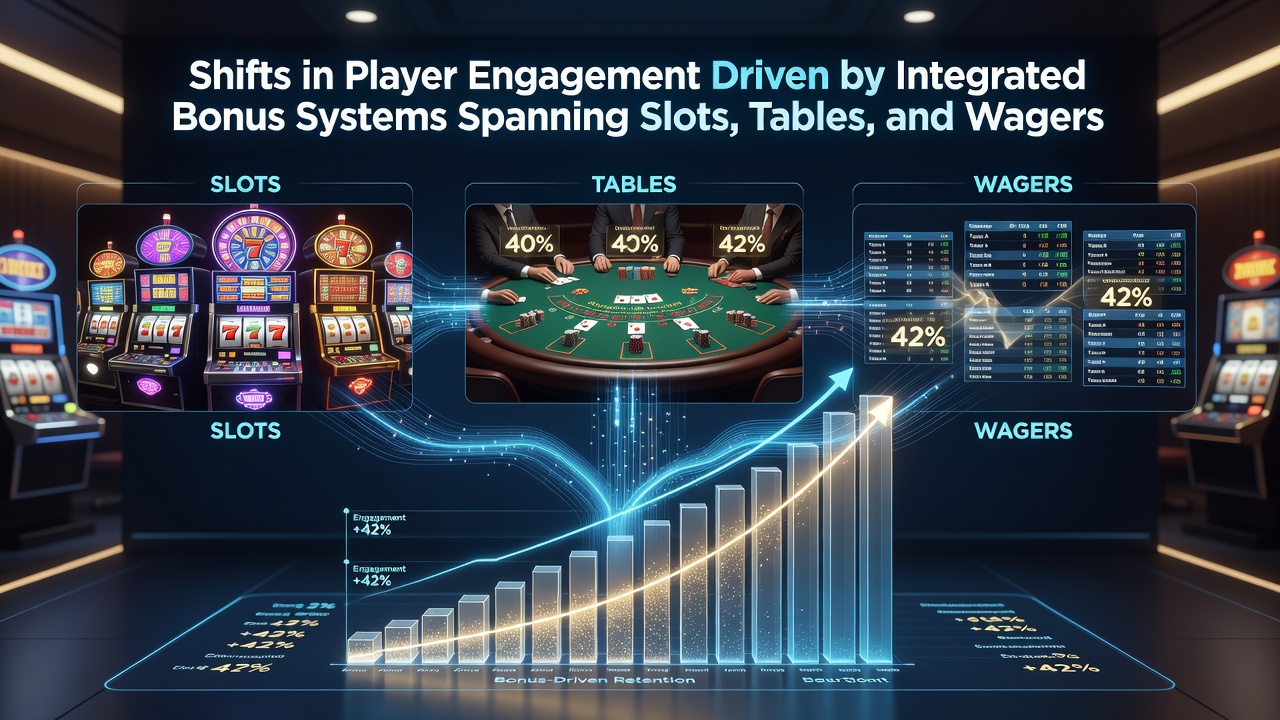
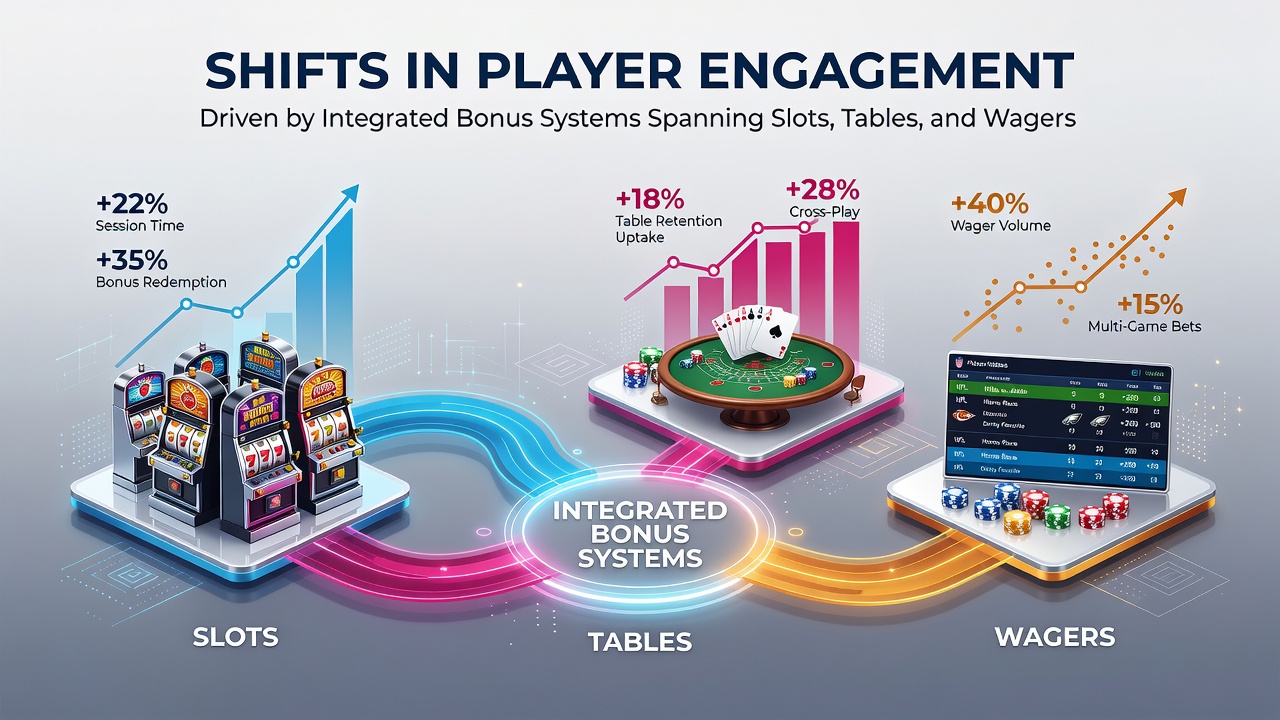
Integrated bonus systems now connect slots, table games, and sports wagers into single reward ecosystems, and operators report measurable changes in how long players stay active across formats. These networks award points or credits that transfer automatically when users switch from one category to another, which creates continuous play loops instead of isolated sessions. Data from multiple markets shows session lengths extending by 18 to 27 percent when such linkages are active, according to figures compiled by the American Gaming Association.
Operators build these systems by attaching shared progress bars or loyalty tiers to games that previously operated separately. A player completing a set number of slot spins earns credits usable on blackjack or roulette, while wagers placed on sports events contribute toward free spins or table-game multipliers. The result is a single balance that moves with the user rather than resetting at each category boundary.
Mechanics Behind Multi-Format Reward Chains
Modern platforms track every qualifying action in a central ledger, then apply conversion rates that differ by game type. Slot activity might generate one point per spin, live table play awards points based on average bet size, and sports wagers contribute according to stake volume. Players see real-time updates on a unified dashboard, which encourages them to sample new categories to finish the next tier faster.
Conversion tables published by several large operators list exact exchange rates. One hundred slot points equal ten live-dealer credits, while five hundred table points unlock a sports-bet bonus of fixed value. These ratios stay visible inside the account interface, allowing users to plan their next moves without leaving the platform.
Observed Changes in Session Patterns
Industry reports indicate that players who once stayed inside a single vertical now rotate across formats more frequently. Average daily active users who engage with at least two categories rose from 31 percent in early 2024 to 44 percent by June 2026, according to aggregated operator data released through the European Gaming and Betting Association. The same dataset shows a 12 percent drop in single-category sessions lasting under fifteen minutes.
Researchers at the University of Nevada, Las Vegas tracked voluntary player cohorts and found that integrated rewards reduced the rate at which users logged off after a losing streak in one game type. Instead of exiting entirely, participants often switched to a linked activity where remaining bonus value could still be used. This behavioral shift appeared consistent across both desktop and mobile cohorts.
Regional Regulatory Context and Data Transparency
Regulators outside the United Kingdom have begun requesting standardized reporting on cross-category bonus activity. The Nevada Gaming Control Board now requires monthly filings that separate bonus-driven play from cash play for each vertical. Similar requirements appeared in Ontario and several Australian states during 2025, prompting operators to invest in granular tracking systems.
These filings reveal that bonus-funded wagers account for an increasing share of total handle. In Nevada, bonus-related sports wagers grew from 9 percent of statewide volume in 2023 to 15 percent by mid-2026. Parallel increases appear in table-game drop and slot coin-in figures, suggesting the integrated systems are expanding overall participation rather than merely redistributing existing activity.
Examples of Implementation Across Operators
One North American casino group introduced a “cycle bonus” that resets weekly and spans all three categories. Players receive a progress meter that fills with any combination of slot spins, table hands, or sports stakes. Completion awards a choice of rewards, each tied to a different vertical. Internal metrics shared with analysts showed a 21 percent rise in cross-vertical play within the first eight weeks after launch.
Another European platform tested a tiered system where higher loyalty levels unlock accelerated conversion rates between formats. Users at the top tier convert slot points to sports bonuses at a 15 percent better rate than base-level members. Retention figures for this cohort improved by 8 percent compared with the control group that lacked accelerated rates.
Conclusion
Integrated bonus systems continue to alter how engagement distributes across slots, tables, and wagers. Operators that publish category-level data show higher rotation between formats and longer overall session durations once rewards become portable. Regulatory filings from multiple jurisdictions confirm these patterns are measurable and growing through 2026, while independent academic tracking supplies supporting behavioral evidence. The structures remain technical implementations of shared ledgers and conversion tables rather than subjective design choices.